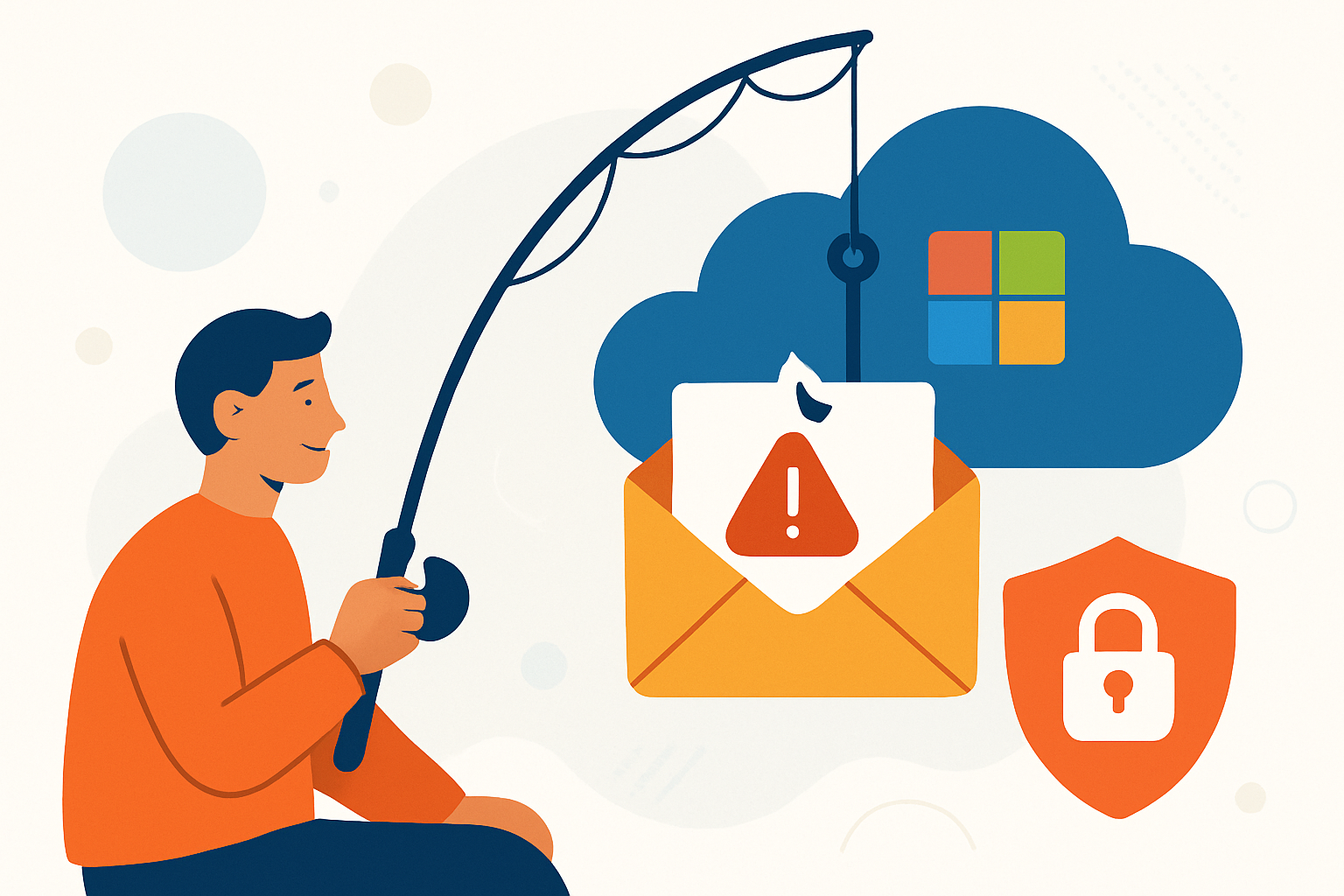
In a concerning development for cybersecurity professionals, a new phishing-as-a-service (PhaaS) operation known as Forg365 has emerged, targeting Microsoft 365 accounts with a sophisticated array of techniques. According to a report from The Hacker News, Forg365 employs a combination of device code phishing, adversary-in-the-middle (AitM) tactics, antibot evasion, and AI-assisted lure creation, making it a formidable threat to enterprise security.
Forg365 is distributed via Telegram and is available for $400 a month or $3,800 annually, making it accessible to a wide range of cybercriminals. The service allows attackers to execute complex phishing campaigns with minimal technical expertise, significantly lowering the barrier to entry for potential threat actors.
The attack chain begins with phishing emails that direct victims to a malicious website designed to harvest device codes. These codes are then used to gain unauthorized access to Microsoft 365 accounts. The use of AitM tactics further complicates detection, as attackers can intercept and manipulate communications between the victim and the legitimate service.
One of the standout features of Forg365 is its use of artificial intelligence to craft convincing phishing lures. This AI-driven approach enhances the effectiveness of phishing emails, increasing the likelihood of user engagement and credential compromise. Additionally, the service includes post-compromise mailbox operations, allowing attackers to maintain persistence and further exploit compromised accounts.
The business impact of such an attack can be severe, with potential exposure of sensitive corporate data, disruption of business operations, and significant financial losses. Organizations relying on Microsoft 365 for their email and collaboration needs are particularly vulnerable, highlighting the need for enhanced security measures.
To mitigate the risks posed by Forg365, security teams should prioritize the implementation of multi-factor authentication (MFA) across all accounts, conduct regular phishing awareness training for employees, and deploy advanced threat detection solutions capable of identifying and blocking AitM attacks.
The emergence of Forg365 underscores the evolving nature of phishing threats and the need for continuous vigilance and adaptation in cybersecurity strategies. As threat actors continue to innovate, organizations must remain proactive in their defenses to protect against these sophisticated attacks.
Key takeaways
- Implement multi-factor authentication (MFA) across all Microsoft 365 accounts.
- Conduct regular phishing awareness training for employees to recognize and report suspicious emails.
- Deploy advanced threat detection solutions to identify and block adversary-in-the-middle attacks.
Source: The Hacker News
Need help with IT, security, or operations?
Impetra provides managed IT, cybersecurity, assessments, and practical automation for Connecticut businesses.
Book a free 15-min review